“The Book of Guilt” Book Club Questions (Catherine Chidgey)
These are the discussion questions we used in our Busy with Books book club session for “The Book of Guilt” by Catherine Chidgey, shared here for anyone who wants to use them for their own book club — or just needs somewhere to process a book that is still living in your head rent-free.
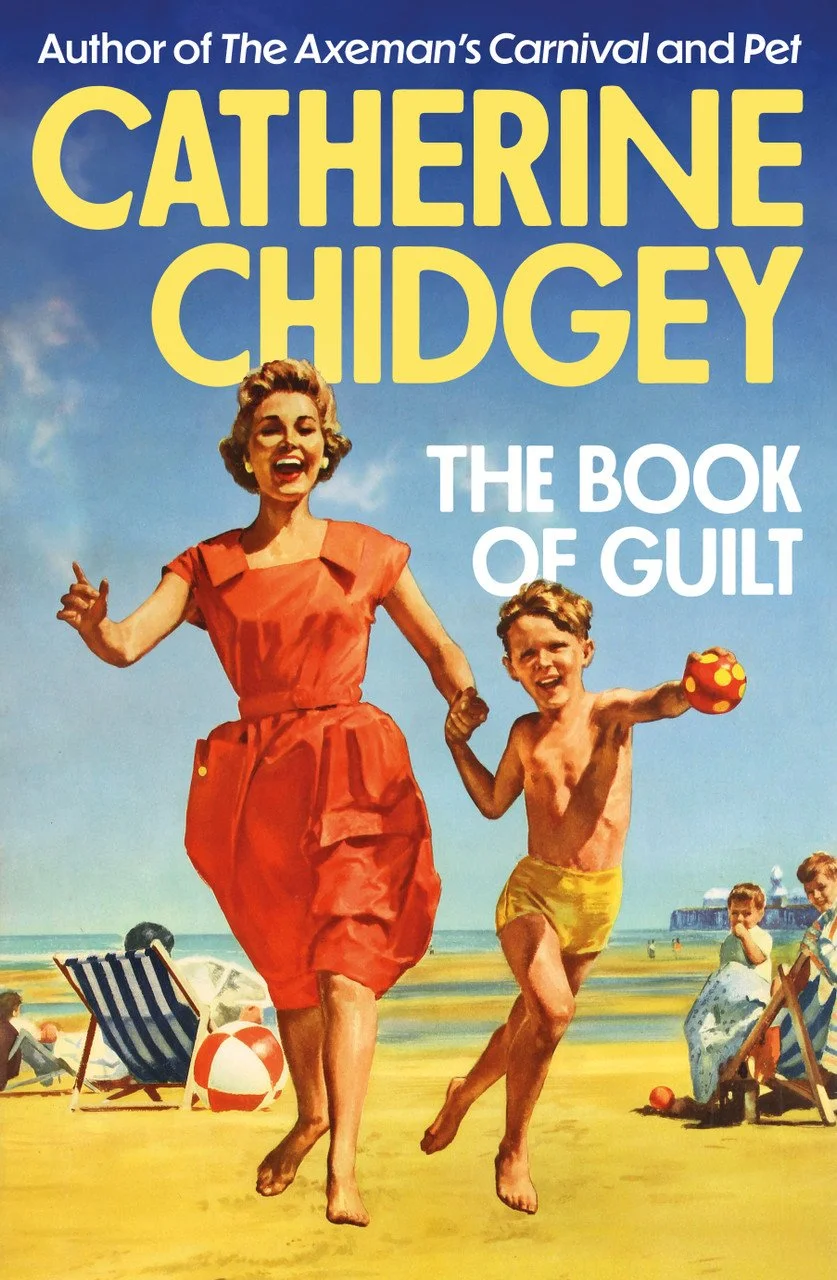
I'll be honest: this one was my favourite book club read in a long time.
Catherine Chidgey's novel is devastatingly brilliant. Set in an alternate 1970s England where nobody won the Second World War, it follows three identical triplets — Vincent, Lawrence, and William — the last remaining residents of a government-run home in the New Forest. What the Sycamore Scheme actually is, and what the boys actually are, unfolds slowly and with extraordinary precision.
It's part dystopia, part literary fiction, part moral reckoning. And the questions it raises about identity, guilt, complicity, and what society decides certain lives are worth — just…*chef’s kiss!
Whether you're running a book club discussion or you've just finished it alone and need somewhere to put all of it, these The Book of Guilt discussion questions are for you.
Before we get into it: did you like the book?
Did you like The Book of Guilt? Did you expect to? Did it draw you in immediately, or did the world take time to build itself around you?
What did you make of the cover and the title? Did their meaning shift for you as the story unfolded?
Questions about the world and its alternate history
The novel operates in an alternate history where the Second World War had no clear winner. How did that premise shape your experience of the story — and did it take time to settle into, or did it pull you in immediately?
Chidgey sets the novel in 1970s England rather than somewhere contemporary. Do you think there's a deliberate reason for that choice? Could this story be transplanted to a different time or place — even now — and carry the same weight?
Questions about the triplets and identity
Vincent, Lawrence, and William have completely different personalities and relationships despite being genetically identical. What does that say about nature versus nurture in this world — and in ours? Are we shaped purely by experience and conditioning, or is something already there from the start? And can children ever truly escape the paths laid down before them?
What role do the three mothers play? How does their behaviour evolve throughout the novel — and do you think the boys have a favourite, and why?
Questions about the Scheme, Dr. Roach, and the Copies
Did the novel convince you of any genuine medical or social value to Dr. Roach's experiments? What did you make of him as a character — is he a true believer, or something colder?
The Copies and the idea that certain lives are valued less than others — is that a metaphor for something in our current society? If so, what?
Questions about Nancy and Margate
Did you work out the connection between Nancy and the triplets early on, or did it catch you off guard? What did you make of Nancy as a character?
What did you think of how Nancy's parents treated her — and the complete absence of consequences after what they did to William and Lawrence? What does that say about whose suffering is taken seriously?
Margate functions as a dream, a promise, a destination. Is it a symbol of a mythical promised land — and does it operate as propaganda, myth, or temptation? Maybe all three?
Questions about guilt, complicity, and the structure
The Minister for Loneliness becomes increasingly central as the Scheme winds down. What role does she play — and why do you think Chidgey gave her that particular title?
What did you think of Vincent's confession and what he did to Lawrence? Does it make him the "bad" brother? Is what he did worse than William's behaviour — or just different?
Guilt runs through every layer of this novel — the townspeople's lack of it, Vincent's quiet accumulation of it. How does the theme play out across the story, and who do you think bears the most?
The novel is divided into three parts: The Book of Dreams, The Book of Knowledge, and The Book of Guilt. Why do you think Chidgey chose to name the three sections after the books that govern the boys' lives? What does each title signal about what's to come?
Questions about the ending
How did you feel about the final chapter?
The novel turns the mirror on the reader in its closing pages — through the Copies and the silent townspeople, Chidgey argues that we are all capable of looking away. How did that land for you personally?
Busy with Books is a reading community built around retreats and monthly book club discussions across Australia and New Zealand. Members get access to all our discussion replays — including this one. If you want in on the next book, and everything we've already read, join us here.